
The living room is more than just a place to watch television or entertain guests. It is where you unwind after a long day, enjoy a quiet morning with coffee, spend time with family, and make memories with the people you love. In 2027, one of the most inviting ways to design this space is to combine the clean lines of modern interiors with the warmth of natural materials, earthy colors, and comfortable textures.
Warm organic modern living room design is all about creating a home that feels refined without being cold, natural without looking unfinished, and stylish without sacrificing comfort. Think creamy walls, light oak furniture, soft linen curtains, sculptural lighting, textured rugs, and beautifully imperfect ceramics.
The best part? You do not need a huge budget or a professionally designed home to achieve this look. A few thoughtful changes can transform an ordinary living room into a peaceful, welcoming retreat.
In this guide, we will explore 12 warm and organic modern living room ideas for 2027, including practical styling tips, color combinations, furniture choices, lighting advice, and affordable decorating ideas. Whether you have a spacious open-plan home, a compact apartment, or a dark living room that needs a refresh, you will find inspiration to create a space that feels naturally beautiful and uniquely yours.
What Is Warm Organic Modern Living Room Design?
Organic modern design combines the simplicity of modern interiors with the natural beauty of organic materials. Rather than relying on sharp contrasts, glossy finishes, or excessive decoration, this style emphasizes natural textures, earthy colors, balanced proportions, and comfortable furnishings.
The warm organic approach adds another important element: a lived-in feeling. Your living room should not look like a showroom where everything is too perfect to touch. It should feel relaxed, personal, and welcoming.
Common elements include:
- Natural materials: Wood, stone, linen, wool, jute, rattan, and clay.
- Warm neutral colors: Cream, ivory, sand, beige, taupe, and warm gray.
- Earthy accents: Terracotta, olive green, chocolate brown, and muted rust.
- Soft shapes: Rounded sofas, curved armchairs, organic coffee tables, and sculptural accessories.
- Layered lighting: Floor lamps, table lamps, wall sconces, and warm ambient light.
- Thoughtful decoration: Handmade ceramics, meaningful artwork, natural branches, and a few well-chosen accessories.
For 2027, a useful direction is to make this familiar aesthetic more personal. Instead of decorating every surface in the same beige shade, introduce subtle color, distinctive materials, vintage finds, and objects that tell a story.
The goal is simple: create a modern living room that looks beautiful but feels even better to live in.
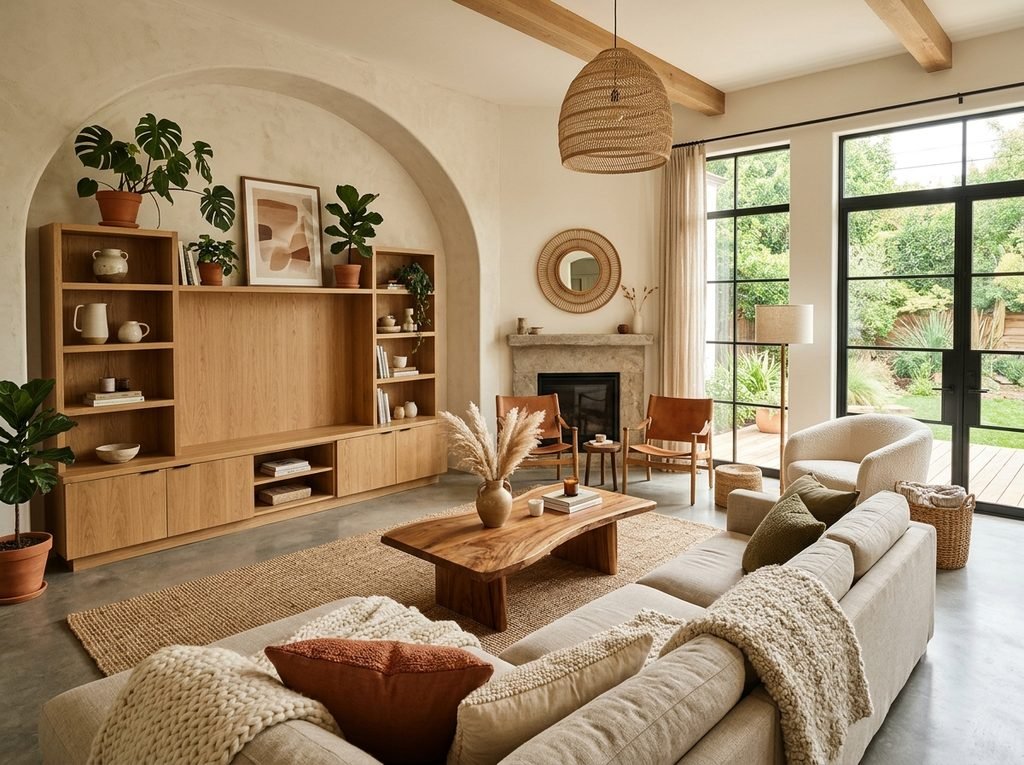
1. Choose a Cream and Beige Color Palette
One of the easiest ways to create a warm organic modern living room is to start with a palette inspired by nature. Cream, beige, sand, oatmeal, and warm taupe provide a soft foundation that makes the entire space feel connected.
However, the secret to making neutral interiors look sophisticated is to use several related shades instead of relying on one color everywhere.
How to Layer Warm Neutrals
Start with warm ivory or creamy white on the walls. Add a beige or oatmeal-colored sofa, then introduce light oak furniture, a textured rug, and linen curtains. Each material should have a slightly different appearance, even if the colors are similar.
For example, imagine my living room with cream walls, an oatmeal sofa, a pale oak coffee table, and a thick wool rug. The colors are simple, but the difference between the smooth walls, visible wood grain, and soft fabrics creates depth.
Consider these combinations:
- Cream walls + beige sofa + light oak furniture for a bright, timeless interior.
- Warm white walls + taupe upholstery + walnut accents for a richer, more sophisticated atmosphere.
- Sand-colored walls + ivory textiles + muted green accessories for a nature-inspired look.
A useful tip is to test paint samples on different walls before making a decision. Morning sunlight and evening lighting can make the same shade appear noticeably different.
Budget-friendly idea: Keep your existing sofa if it is in good condition. Change the cushion covers, add a textured throw, and introduce a natural-colored rug before investing in new furniture.
Suggested image placement: Add an original AI-generated image showing cream walls, beige upholstery, and natural wood.
2. Bring in Natural Wood and Organic Textures
Natural wood is one of the most important materials in organic modern interior design. It introduces warmth, visual texture, and a connection to nature that painted or highly polished surfaces may not provide on their own.
Consider mixing light oak, medium-toned wood, and deeper walnut finishes rather than choosing every piece from the same furniture collection. The result can feel more collected and personal.
Which Natural Materials Should You Use?
- Oak: Ideal for coffee tables, shelving, sideboards, and flooring.
- Walnut: Adds depth and works beautifully with cream, olive, and caramel.
- Linen: Perfect for curtains, cushion covers, and relaxed upholstery.
- Wool: Adds softness through rugs, blankets, and decorative textiles.
- Jute: Creates a casual, earthy foundation under a seating area.
- Stone: Introduces a solid, sculptural element through tables and accessories.
You do not need all these materials in one room. Start with three or four and repeat them throughout the space for a cohesive look.
For instance, pair an oak coffee table with linen curtains, a wool rug, and a stone-look decorative bowl. These materials complement one another without making the room feel overly coordinated.
When buying furniture, look beyond appearance. Consider construction, cleaning requirements, durability, and whether the piece will still suit your home several years from now.
Practical tip: If replacing your furniture is too expensive, consider a wooden tray, a secondhand side table, or a simple natural-fiber rug. Small additions can introduce the organic aesthetic without a complete renovation.
3. Add a Curved Sofa and Sculptural Furniture
Straight lines have their place in modern interiors, but combining them with gentle curves can make a living room feel softer and more inviting.
Rounded sofas, oval coffee tables, curved armchairs, and sculptural side tables are design directions worth considering for 2027. Their appeal is both practical and visual: curved furniture can soften a room dominated by rectangular walls, square windows, and straight-edged cabinetry.
How to Introduce Curves Without Overcrowding the Room
Choose one main curved piece rather than replacing everything. A rounded coffee table or an armchair with a curved back can create enough contrast against a conventional sofa.
In a small living room, an oval coffee table may help create a smoother circulation route than a large rectangular table with prominent corners. Its suitability will still depend on the room’s dimensions and furniture placement.
In a spacious living room, a curved sofa can become the focal point. Position it opposite a fireplace or arrange it around a central coffee table to create a natural gathering area.
Avoid selecting a sofa solely because it looks beautiful in a photograph. Check its dimensions, seat depth, upholstery, and access through doorways before purchasing.
Styling idea: Combine a curved cream sofa with a round wood coffee table and a straight-lined console. The contrast between soft curves and clean geometry keeps the design interesting.
4. Create an Earthy Living Room With Olive Green and Terracotta
Neutral interiors can be beautiful, but they are not the only way to achieve an organic look. Olive green, terracotta, rust, clay, and chocolate brown can make a modern living room feel warmer and more distinctive.
Earth-inspired colors are a natural fit for this style because they complement wood, stone, and textured fabrics. Rather than treating them as unrelated decorations, use them as part of a consistent palette.
Three Earthy Color Combinations to Try
Olive green and cream: Use cream walls and a neutral sofa, then add olive cushions, a green ceramic lamp, or a painted sideboard.
Terracotta and beige: Introduce clay-colored cushions, terracotta pottery, or artwork with warm rust tones. This combination works especially well with light wood.
Chocolate brown and warm white: Choose walnut furniture, dark brown accents, and creamy upholstery for a grounded, elegant look.
If you prefer colorful living spaces, you can introduce muted blue, ochre, or burgundy through artwork and accessories. A warm organic room does not need to be completely neutral.
Start with a limited palette of two or three main colors, then repeat each shade in different places. For example, a small terracotta detail in a cushion can be echoed in a painting or ceramic vase.
Budget tip: Paint a small side table or update cushion covers before committing to an accent wall. Accessories are easier and less expensive to change if your preferences evolve.
5. Design a Dark Living Room That Feels Cozy, Not Heavy
A dark living room can feel sophisticated, intimate, and comfortable when its colors and lighting are balanced carefully. Rather than trying to make every room bright white, consider using deeper shades to create a relaxing atmosphere.
Olive green, warm charcoal, cocoa brown, and muted taupe work particularly well with natural wood and creamy textiles.
How to Decorate a Dark Living Room
First, decide whether you want the entire room to feel enveloping or whether you prefer a lighter space with a darker focal point.
For a subtle approach, paint one wall a deep olive shade and keep the remaining walls warm white. Add walnut furniture, a cream sofa, and textured curtains.
For a more dramatic design, use a darker color across several walls, then balance it with lighter upholstery, reflective accents, and multiple light sources.
Lighting is essential. A single ceiling fixture may leave corners feeling gloomy, especially in rooms with limited natural light. Use a combination of floor lamps, table lamps, and wall lighting to distribute illumination throughout the space.
Also consider the room’s natural light and orientation before choosing paint. Test samples in the actual room at different times of day.
A simple formula: Dark walls + warm wood + light upholstery + layered lighting = a cozy, balanced living room.
This approach is particularly useful if you enjoy reading, watching films, or relaxing in the evening and want your living room to feel more intimate than a bright, minimalist space.
6. Layer Lighting for a Relaxed, Welcoming Atmosphere
Lighting can change the entire mood of a living room, even when the furniture remains exactly the same.
A well-designed organic modern interior uses multiple light sources instead of depending entirely on overhead lighting. This creates flexibility for reading, entertaining, working, and relaxing.
The Three Layers of Living Room Lighting
Ambient lighting: Provides general illumination. This might come from ceiling fixtures, recessed lights, or indirect lighting.
Task lighting: Supports specific activities. A floor lamp beside an armchair, for example, makes a reading corner more useful.
Accent lighting: Highlights artwork, architectural details, shelves, or decorative objects.
For a warm atmosphere, consider bulbs around 2700K to 3000K, depending on the mood and function you want. Lower color temperatures generally produce warmer-looking light, while brighter or cooler lighting may be more appropriate for certain tasks.
Look for lamps made from ceramic, linen, wood, or textured glass to complement the organic aesthetic.
Dimmer switches can also make a difference, allowing you to adjust brightness throughout the day. Check bulb and fixture compatibility before purchasing a dimmer.
Affordable idea: If you can only make one change, add a floor lamp beside your sofa and a small table lamp on a console. Two carefully placed lamps may create a more inviting evening atmosphere than relying on one bright ceiling light.
7. Use Natural Stone and Handmade Decorative Pieces
One way to stop a neutral living room from looking flat is to introduce materials with natural variation.
Stone, clay, ceramics, and handcrafted accessories provide subtle differences in shape, color, and texture. These details help the room feel personal rather than assembled from identical showroom pieces.
How to Style Stone and Ceramics
A travertine coffee table can serve as a sculptural focal point, while a small stone bowl or ceramic vase introduces a similar material in a more affordable way.
Arrange objects in groups of two or three, varying their height and shape. For example, place a rounded ceramic vase beside a low wooden bowl and a small stack of books.
Avoid covering every available surface. Leaving some empty space helps each object stand out and makes the room easier to maintain.
If natural stone is outside your budget, look for well-made alternatives with a similar appearance. A stone-look table or textured ceramic accessory can create a related effect without the expense of a solid stone piece.
When purchasing stone furniture, check its weight, surface finish, care instructions, and resistance to staining. Different stones behave differently, so maintenance matters as much as appearance.
Styling rule: Combine one substantial decorative object with a few smaller accessories instead of filling the coffee table with lots of tiny items.
8. Bring Nature Indoors With Plants and Organic Shapes
Plants are a simple way to introduce color and life into a modern living room. Their irregular shapes also provide a natural contrast to clean architectural lines and carefully arranged furniture.
You do not need a large indoor garden. One well-positioned plant can make a meaningful difference.
Choose Plants That Suit Your Room
A tall indoor tree can fill an empty corner, while smaller plants work well on shelves, side tables, or windowsills. Choose varieties according to available light, humidity, space, and your willingness to care for them.
If your living room receives strong sunlight, consider plants suited to that exposure. For darker spaces, choose shade-tolerant options, but remember that no plant can thrive indefinitely without sufficient light.
Use terracotta pots, woven baskets, or matte ceramic planters to reinforce the natural look.
You can also bring nature indoors without adding plants. Display branches in a vase, choose landscape artwork, or arrange furniture to make the most of a garden or outdoor view.
Small-space tip: Use one tall plant instead of several small pots if floor space is limited. It creates a stronger focal point while keeping the arrangement visually simple.
If you have pets or young children, check whether your chosen plants are safe for them before bringing them home.
9. Make a Small Living Room Feel Spacious and Organic
A small living room can still feel warm, stylish, and comfortable. The secret is to select furniture carefully, preserve walking space, and use materials that make the room feel connected rather than crowded.
Smart Small Living Room Ideas
Choose appropriately scaled furniture. A compact sofa with raised legs can leave more visible floor space than a bulky design that dominates the room.
Use rounded tables. Oval or round coffee tables can help soften the layout and may be easier to navigate in tight spaces.
Use vertical storage. Wall-mounted shelves and tall bookcases create storage without using the entire floor area.
Keep window treatments simple. Hang curtains high and allow them to fall close to the floor when the layout permits. This can emphasize the room’s height.
Reduce visual clutter. Use baskets, closed cabinets, and storage ottomans to keep everyday items organized.
Mirrors can also help distribute light visually, especially when positioned opposite a window or another bright area.
However, do not remove every personal object in pursuit of minimalism. A few favorite books, a meaningful photograph, or a distinctive handmade piece can give the room character.
For more practical ideas, explore our related guide: How to Transform Small Spaces with 12 Clever Home Decor Hacks.
10. Create a Warm and Organic Open-Plan Kitchen Living Room
In many modern homes, the kitchen and living room share one open area. This arrangement can make a home feel spacious and social, but it also creates a decorating challenge: how do you define each zone without making the space feel disconnected?
The answer is to repeat materials and colors while giving each area a clear purpose.
How to Connect the Kitchen and Living Room
Start with a shared palette. If your kitchen has oak cabinets and warm white walls, echo those tones through the living room’s coffee table, shelving, or decorative accessories.
Use a rug to define the seating area. In an open-plan layout, this gives the sofa and chairs a visual boundary without requiring a wall.
Lighting can also distinguish different activities. Pendant lighting may define the kitchen island or dining area, while floor and table lamps create a softer atmosphere in the living room.
Furniture placement matters, too. Position the sofa so it helps separate the lounge from the kitchen while preserving clear routes between spaces.
If you have a small kitchen living room, avoid using too many contrasting finishes. A limited palette can make the entire area feel more spacious and cohesive.
Example: Imagine a kitchen with light oak cabinetry, a cream island, and warm stone-look countertops. A nearby living area with a beige sofa, oak coffee table, and muted green cushions would feel connected without matching every detail.
11. Add Boho Living Room Details Without Losing the Modern Look
If you love relaxed interiors, a touch of boho living style can make your organic modern living room feel more expressive and welcoming.
Traditional bohemian decorating often embraces layered patterns, collected objects, and a mix of colors. Organic modern boho takes a more edited approach, combining those relaxed elements with clean lines, natural materials, and a calmer palette.
The result is a room that feels creative without becoming visually overwhelming.
How to Combine Boho and Organic Modern Design
Begin with a neutral foundation, such as warm white walls and a simple linen sofa. Then introduce a few distinctive pieces:
- A woven pendant light or rattan accent chair.
- A patterned rug in earthy colors.
- Handmade pottery or a decorative bowl.
- Cushions featuring subtle geometric or botanical patterns.
- A framed textile or piece of nature-inspired artwork.
The trick is to choose accessories that share at least one common feature, whether that is color, texture, or material.
For example, a jute rug, a woven basket, and a rattan chair can work together because they repeat natural fibers. You can then introduce an olive cushion or terracotta vase for contrast.
Avoid adding every bohemian element you find appealing. Too many patterns, colors, and accessories can compete with the clean foundation that makes organic modern design distinctive.
Budget-friendly idea: Shop secondhand for baskets, wooden stools, and unique decorative pieces. Vintage accessories often bring more personality to a room than a collection of brand-new matching items.
12. Personalize Your Living Room With Art, Books, and Meaningful Objects
The final step is to make the room feel like yours.
A beautifully decorated living room should reflect the people who use it, not simply reproduce a photograph from a design magazine. Personal objects add character, create visual interest, and make the space feel lived in.
Start With One Meaningful Focal Point
Choose a large piece of artwork, a vintage cabinet, a distinctive mirror, or a collection of favorite books. Build the surrounding arrangement around that item rather than buying accessories without a plan.
For example, an abstract painting featuring cream, rust, and olive can inspire the room’s cushion colors and decorative accents. This creates a visual connection without requiring every item to match.
Books can also serve a decorative purpose while remaining useful. Stack a few on a coffee table, arrange them on open shelving, or display a favorite collection in a wooden bookcase.
Mixing old and new pieces is another way to introduce personality. A vintage wooden side table can look beautiful beside a contemporary sofa, particularly when the colors and proportions work together.
Keep the Room Balanced
Personalization does not mean displaying everything at once. Rotate seasonal decorations, group related objects, and leave some surfaces clear.
Think about how you actually use the room. If you enjoy reading, make room for a comfortable chair and a lamp. If you entertain frequently, prioritize flexible seating and surfaces for drinks. If you have children, choose durable upholstery and accessible storage.
Your living room should support your lifestyle first and reflect your aesthetic preferences second.
Design takeaway: The most successful organic modern spaces combine natural materials with personal meaning. The furniture creates the foundation; the objects you choose make the room feel like home.
How to Put Together Your Organic Modern Living Room on a Budget
You do not need to renovate your home to create a warm, organic modern interior. A gradual approach allows you to improve the room while keeping costs manageable.
Here is a practical order of priorities.
1. Start With the Color Palette
Choose a warm neutral foundation and identify two accent colors. You may be able to use your existing wall color and simply adjust accessories.
2. Update the Textiles
Add cushion covers, a throw, and a rug with complementary textures. These changes can transform the atmosphere without replacing major furniture.
3. Introduce Natural Materials
Look for a wooden side table, ceramic accessories, or a natural-fiber basket. Consider secondhand furniture before buying new pieces.
4. Improve the Lighting
Add a floor lamp or table lamp and use suitable warm-toned bulbs to create a more inviting evening atmosphere.
5. Finish With Personal Details
Add plants, artwork, books, and meaningful objects only after the essential layout and larger pieces are in place.
A useful rule is to invest in pieces you use every day and save on accessories that are easy to replace. A comfortable, durable sofa is generally a better long-term investment than several trendy decorative objects.
Before making purchases, measure the room, check furniture dimensions, and create a short shopping list. This helps prevent expensive mistakes and makes it easier to maintain a consistent design.
Common Mistakes to Avoid in Organic Modern Living Room Design
Even a beautiful palette can fall flat if the room lacks balance. Keep these common mistakes in mind as you decorate.
Using too much beige without texture. Similar colors can look sophisticated, but a room needs variation. Mix smooth surfaces with woven fabrics, visible wood grain, and tactile accessories.
Choosing furniture that is too large. Oversized sofas may look appealing online, but they can overwhelm small rooms. Measure carefully and preserve comfortable walking routes.
Relying on a single light source. One ceiling fixture may create harsh shadows and leave corners poorly illuminated. Combine ambient, task, and accent lighting.
Buying an entire matching furniture set. Coordinated furniture can look neat, but mixing compatible finishes and shapes often creates a more personal space.
Following every trend at once. Curved furniture, dark colors, handmade accessories, and boho textiles can all work together, but the room needs a clear visual direction.
Ignoring practical maintenance. Delicate fabrics and porous materials may require more care than expected. Consider pets, children, sunlight, cleaning habits, and daily use before selecting finishes.
Forgetting your own preferences. A living room should support your routines and taste. Trends can provide inspiration, but they should never dictate every decision.
For more information on selecting suitable paints and finishes, consult the product manufacturer’s technical guidance. If you are repainting, also follow ventilation and label precautions. The U.S. Environmental Protection Agency’s guide to volatile organic compounds explains why some household products can affect indoor air quality.
Frequently Asked Questions About Warm Organic Modern Living Rooms
1. What Is the Difference Between Organic Modern and Modern Interior Design?
Modern interior design generally emphasizes clean lines, functional furniture, and a streamlined appearance. Organic modern design builds on those principles by introducing natural materials, earthy colors, soft curves, and tactile finishes. The result is a space that feels contemporary but warmer and more connected to nature.
2. What Colors Will Work Best for an Organic Modern Living Room in 2027?
Cream, warm white, beige, taupe, mushroom, olive green, terracotta, and chocolate brown are excellent choices. For a lighter interior, combine cream walls with pale oak and beige upholstery. For a more dramatic look, use olive or cocoa accents with warm white textiles.
Color forecasts vary, so choose shades that suit your lighting, furniture, and personal preferences rather than following a prediction blindly.
3. How Can I Make My Living Room Look Organic Modern Without Spending Much Money?
Start by rearranging your existing furniture and removing unnecessary clutter. Introduce a consistent palette, update cushion covers, add a warm floor lamp, and display a few natural materials such as wood, woven baskets, or ceramic accessories.
You can also shop secondhand for furniture and decorative pieces. Focus on a few meaningful changes instead of replacing everything at once.
4. Can Organic Modern Design Work in a Small Apartment?
Absolutely. Its emphasis on simplicity, natural light, and carefully selected furniture makes it well suited to compact spaces.
Choose furniture that fits your room, use vertical storage, keep the color palette cohesive, and avoid overcrowding surfaces. A small sofa, an oval coffee table, a light rug, and a few natural accessories can create a comfortable, stylish living room.
5. How Do I Decorate a Dark Living Room in an Organic Modern Style?
You can embrace the darker atmosphere with olive green, chocolate brown, or warm charcoal while balancing those colors with cream upholstery, natural wood, and layered lighting.
If the room receives little daylight, test paint samples carefully and use lamps to illuminate darker corners. Mirrors and lighter textiles can also help the space feel more open without sacrificing its cozy character.
6. Is Boho Living Room Decor Compatible With Organic Modern Design?
Yes. Both styles use natural materials and appreciate a relaxed, personal atmosphere. The difference is that organic modern interiors typically use a more restrained palette and simpler shapes.
Combine woven accessories, handmade ceramics, and a patterned rug with clean-lined furniture and warm neutral colors. This creates a modern boho living room that feels inviting without looking cluttered.
7. Which Materials Are Best for a Warm Organic Modern Living Room?
Wood, linen, wool, natural stone, jute, rattan, and clay are all excellent choices. You do not need to use every material in the same room. Select a few complementary textures and repeat them throughout the space to create visual consistency.
When choosing materials, consider durability, cleaning requirements, and your household’s needs alongside appearance.
Conclusion: Create a Living Room That Feels Like Home
Warm organic modern living room design is about more than choosing fashionable furniture or following the latest decorating trends. It is about creating a space that combines natural beauty, everyday comfort, and personal style.
From creamy neutral palettes and natural wood to curved furniture, earthy accent colors, layered lighting, and meaningful accessories, there are countless ways to make your home feel warmer and more inviting in 2027.
You do not need to incorporate all 12 ideas. Start with the changes that will make the biggest difference to your space. Perhaps that means adding a textured rug, introducing olive green accents, improving your lighting, or rearranging your seating to create a more comfortable conversation area.
The best interiors develop gradually. Choose quality where it matters, mix materials thoughtfully, and leave room for the objects and experiences that make your home unique.
Ready to transform your living room? Choose your favorite idea from this guide and try it this week. Then explore more inspiration on HomeDecorDaily for practical home decorating tips, small-space solutions, and beautiful ideas to make every room feel more like home.